
iCare Medical Group • Chronic Conditions
Understanding Hypertension
High blood pressure often has no symptoms—but it quietly strains your heart, brain, kidneys, and eyes. Here’s what it means, how to lower your risk, and when to get care.
What Is Hypertension?
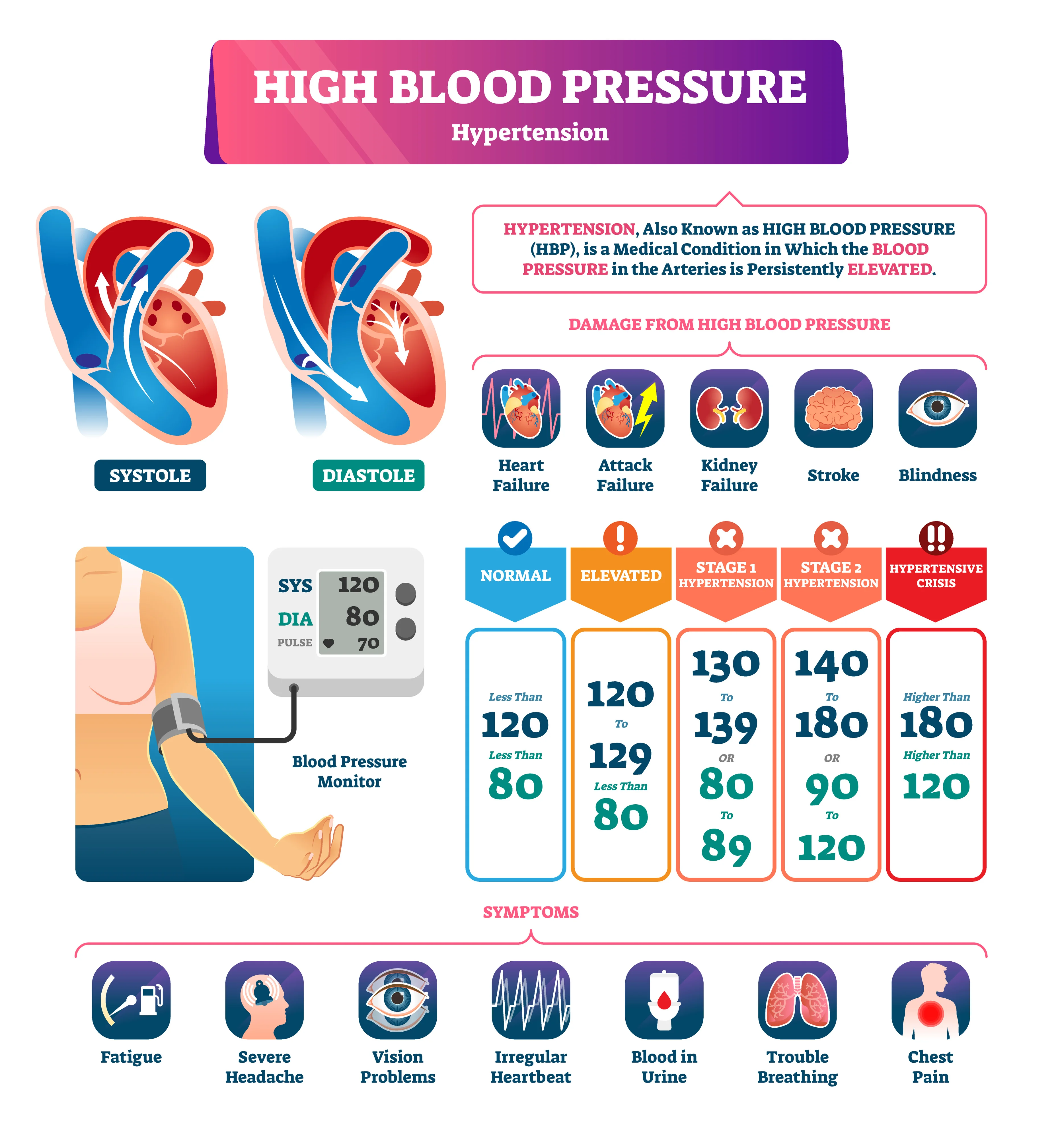
Hypertension means the force of blood pushing against your artery walls is consistently too high. Over time, that pressure damages vessels and vital organs. Most adults should aim for an average blood pressure <130/80. Your exact goal depends on age, health conditions, and your care plan.
Prevention & Management
Lifestyle Foundations
- Lower sodium & choose whole foods: Aim for <1,500–2,000 mg sodium/day. Prioritize vegetables, fruits, lean protein, and minimally processed foods.
- Move most days: 150 minutes/week of moderate activity (e.g., brisk walking) plus 2 days of light strength training.
- Healthy weight & waist: Even 5–10% weight reduction can meaningfully lower blood pressure.
- Limit alcohol & quit smoking: No smoking; alcohol ≤1 drink/day (women) or ≤2 (men) if you drink.
- Sleep & stress care: 7–9 hours sleep; consider screening for sleep apnea; practice stress reduction (breathing, walks, stretching).
- Monitor at home: Use an upper-arm cuff, measure at the same time daily, record 2 readings, and bring logs to your visit.
We select/adjust medications (e.g., ACE inhibitors, ARBs, thiazides, calcium-channel blockers) to hit your target safely.
Practical nutrition swaps, activity plans, and small weekly goals you can live with.
We address related risks like high cholesterol, diabetes, and kidney function together.
Early rechecks every 4–8 weeks, then spacing out once readings are stable and logs look good.
Potential Complications
Uncontrolled blood pressure leads to vessel damage and increases risks for serious events.
- Heart disease and heart failure
- Stroke and transient ischemic attack (TIA)
- Chronic kidney disease
- Vision loss (retinopathy)
- Peripheral artery disease
- Aneurysm and vascular damage
Common Causes
When to See a Doctor
If any of these apply, let’s talk. Early guidance prevents long-term problems.
- Consistent home readings ≥140/90 across several days
- You’re pregnant and seeing elevated readings
- Headaches, chest discomfort, shortness of breath, or swelling
- Dizziness, vision changes, or new confusion
Call 911 or go to the ER if you have:
- BP ≥180/120 with symptoms (chest pain, shortness of breath, weakness/numbness, vision loss, severe headache)
- Fainting, sudden severe headache, or neurologic symptoms